Road Roller Vector and Silhouette Road Graphics: A Practical Guide for Designers and Creators
Vector graphics and silhouette assets have become essential components in modern design workflows. Among them, the road roller vector and silhouette road graphics offer a unique combination of industrial precision and creative flexibility. Whether you are producing marketing materials, building a website, or designing merchandise, these scalable assets help you maintain consistency across projects while saving time on asset creation.
This article walks through what these files are, how they fit into real-world processes, and how you can integrate them into your own work without unnecessary complexity.
What Are Road Roller Vector and Silhouette Road Graphics?
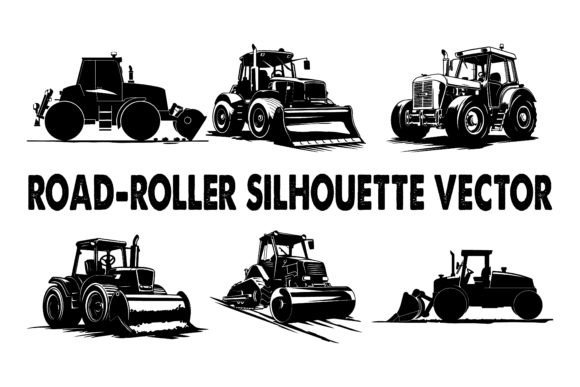
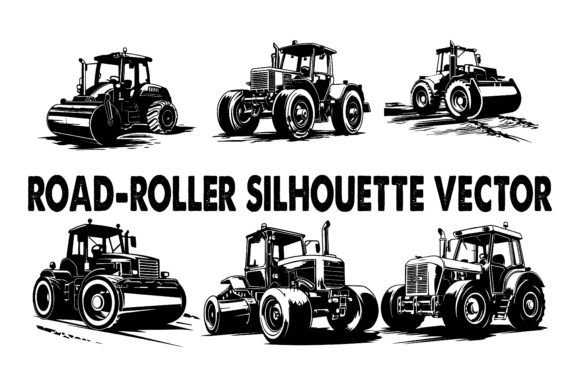
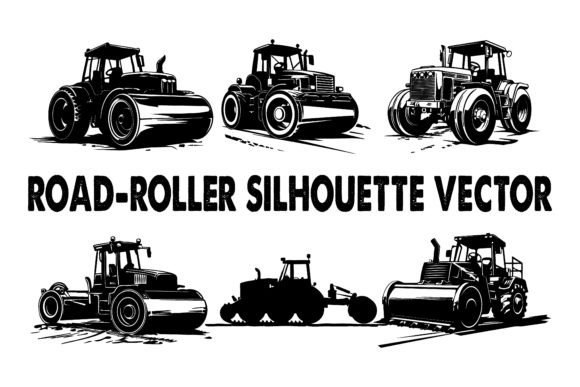
A road roller vector is a digitally created illustration of a road roller machine, built using paths and points rather than pixels. This means it can be scaled to any size without losing quality. The silhouette version strips away detail and color, leaving a solid black or single-color outline that emphasizes shape and form.
Silhouette road graphics follow the same principle, often depicting road construction scenes, paving equipment, or infrastructure elements in a clean, minimal style. These files are typically delivered in three formats: editable EPS files, transparent PNG files, and high-resolution JPG images. Each format serves a distinct purpose in a production pipeline, and knowing when to use each one can improve both efficiency and output quality.
Why the Format Matters: EPS, PNG, and JPG in Your Workflow
Having access to all three file types in a single purchase gives you flexibility across different stages of a project. Here is how each format fits into a typical workflow:
Editable EPS Files
EPS files are vector-based and editable in professional design software such as Adobe Illustrator, CorelDRAW, or Affinity Designer. You can change colors, resize elements, combine multiple silhouettes, and add your own details. These files are best used during the creation and iteration phase, when you need full control over the graphic. For example, you might take a road roller silhouette and layer it with a construction site background, adjust the angle, or change its position within a composition.
Transparent PNG Files
PNG files with transparent backgrounds are ready to drop into any project without additional editing. They work well for web design, social media graphics, and digital publications where you need a clean image on top of a colored or textured background. If you are building a website and need a construction vehicle icon on a blue hero section, the transparent PNG saves you from having to cut out the background yourself.
High-Resolution JPG Images
JPG files are raster-based and come with a solid background, usually white. They are ideal for print projects, presentations, and physical mockups where a clear, high-quality image is needed quickly. If you are printing a brochure or designing a billboard, the high-resolution JPG gives you the detail required for large-format output without requiring vector editing software.
Where to Use Road Roller Vector and Silhouette Road Graphics
These assets are versatile enough to fit into multiple contexts. Below are practical use cases organized by project type and workflow stage.
Graphic Design and Print Materials
In print design, vector files give you the freedom to scale illustrations for posters, flyers, banners, and brochures. A road roller silhouette can anchor a construction-related poster or serve as a background element on a brochure cover. Using the EPS file, you can adjust stroke weights, add textures, or combine multiple construction machines into a single layout. The high-resolution JPG works well for print-ready files when vector editing is not required.
Web and Digital Design
For websites and apps, transparent PNG files are the most practical choice. Use a road roller silhouette as an icon for a construction services page, a background image for a heavy equipment section, or a visual divider between content blocks. Because the PNG has no background, it layers cleanly over gradients, patterns, or photographs. If you are working on a responsive site, the vector EPS file can be exported as SVG for crisp rendering on all screen sizes.
Merchandise and Apparel
When designing T-shirts, mugs, stickers, or hats, a clean silhouette is often more effective than a detailed illustration. The simplicity of a road roller silhouette translates well to screen printing, embroidery, and vinyl cutting. Start with the EPS file to refine the shape and spacing, then export a PNG for your mockup or production file. Sticker designs benefit especially from transparent PNGs, as they can be placed on curved surfaces without awkward background edges.
Advertising and Marketing
Online ads, social media posts, and print ads often require quick iteration. Having a transparent PNG of a road roller silhouette means you can drop it directly into a banner ad or Instagram post without additional editing. For billboards or large print ads, the high-resolution JPG ensures sharp output at scale. The vector source file gives you the option to create variations for A/B testing, such as changing the orientation or adding complementary construction elements.
Educational and Training Materials
In textbooks, infographics, and training manuals, clear visuals improve comprehension. A road roller vector can illustrate machine parts, show operational sequences, or compare equipment types. Use the EPS file to label components, adjust colors for emphasis, or create step-by-step diagrams. Silhouette graphics work well for infographics that need to remain clean and uncluttered while conveying technical information.
Presentations and Internal Documents
Keynote slides and PowerPoint presentations often rely on simple, recognizable icons. A road roller silhouette placed on a slide helps communicate heavy machinery or construction topics at a glance. The transparent PNG format is especially useful here, as it integrates smoothly with branded slide templates and colored backgrounds. Keeping a library of these assets on hand reduces the time spent searching for appropriate visuals before a meeting.
Product Packaging and Labeling
For businesses in the construction supply or heavy equipment space, packaging design benefits from strong, simple graphics. A road roller silhouette on a box or label conveys the product category instantly. The high-resolution JPG is useful for mockups and client approvals, while the EPS file allows for precise scaling and positioning on different package sizes.
Stationery and Brand Materials
Business cards, letterheads, and notebooks can all incorporate a road roller silhouette as a subtle branding element. Because the silhouette is minimal, it works well in small spaces without overwhelming other design elements. Use the EPS file to adjust the weight and placement, then export a PNG for digital proofs.
Art, Scrapbooking, and Craft Projects
Creative hobbyists and DIY enthusiasts can use these files for wall art, scrapbooking layouts, or custom craft projects. The transparent PNG is especially convenient for print-and-cut applications, while the JPG works for decoupage or transfer techniques. The vector file allows resizing for different canvas sizes without resolution loss.
How to Integrate These Assets Smoothly Into Your Workflow
Preparation and organization make a significant difference when working with multiple file formats. Here are practical tips for getting the most out of your road roller vector and silhouette road graphics.
Organize Your Asset Library
Create a dedicated folder structure that separates EPS, PNG, and JPG files. Name files consistently such as RoadRollerSilhouette_EPS.ai or RoadRollerVector_PNG.png so you can locate the correct format quickly during a project. This is especially helpful when working under deadline pressure or collaborating with a team.
Check Compatibility Before Starting
Ensure your design software supports EPS files. While most professional vector editors do, some web-based tools may require SVG or PNG formats. If you are working in a browser-based design environment, the transparent PNG is likely your best option. For print production, confirm that the resolution of the JPG file meets your printer specifications.
Use the Right Format for the Right Stage
Start with the EPS file during the concept and iteration phase. Make all your adjustments while the graphic is still vector-based. Once the design is finalized, export or use the PNG for digital applications and the JPG for print. This approach minimizes rework and ensures consistency across all outputs.
Maintain Consistency Across Projects
If you are using road roller silhouettes across multiple projects such as a website, brochure, and social media ads try to use the same vector source file for each application. This keeps the shape, proportion, and style uniform across channels. Small inconsistencies in silhouette weight or spacing can make a brand look unpolished over time.
Consider Scalability for Future Use
Because vector files are resolution-independent, they can be used for both small icons and large billboards. Hold onto your EPS files even after a project is finished. You may need to produce a large-format display or a new merchandise line months later, and having the original vector file prevents you from having to recreate the asset.
Practical Workflow Example
Imagine you are designing a set of marketing materials for a road construction company. You begin with the EPS road roller silhouette, adjusting the line weight to match the brand style guide. You export a transparent PNG for the website footer icon and a high-resolution JPG for the service brochure cover. Later, you reuse the same EPS file to create a sticker design for a company giveaway. Because you started with the vector format, every output remains consistent and sharp, regardless of the medium.
Final Observations on Long-Term Use
Road roller vector and silhouette road graphics are not just one-off assets. They are tools that, when used with intention, improve efficiency across multiple projects and platforms. The key is knowing which format to reach for at each stage of your workflow and organizing your files so that they are easy to find and reuse. Whether you are a freelance designer, a small business owner, or a marketing professional, these graphics help you produce polished work without starting from scratch every time.
By building a small library of well-organized vector and silhouette assets, you reduce repetitive design work and free up time for higher-level creative decisions. That practical advantage is what makes these files valuable beyond their immediate visual appeal.